Last updated November 22, 2026
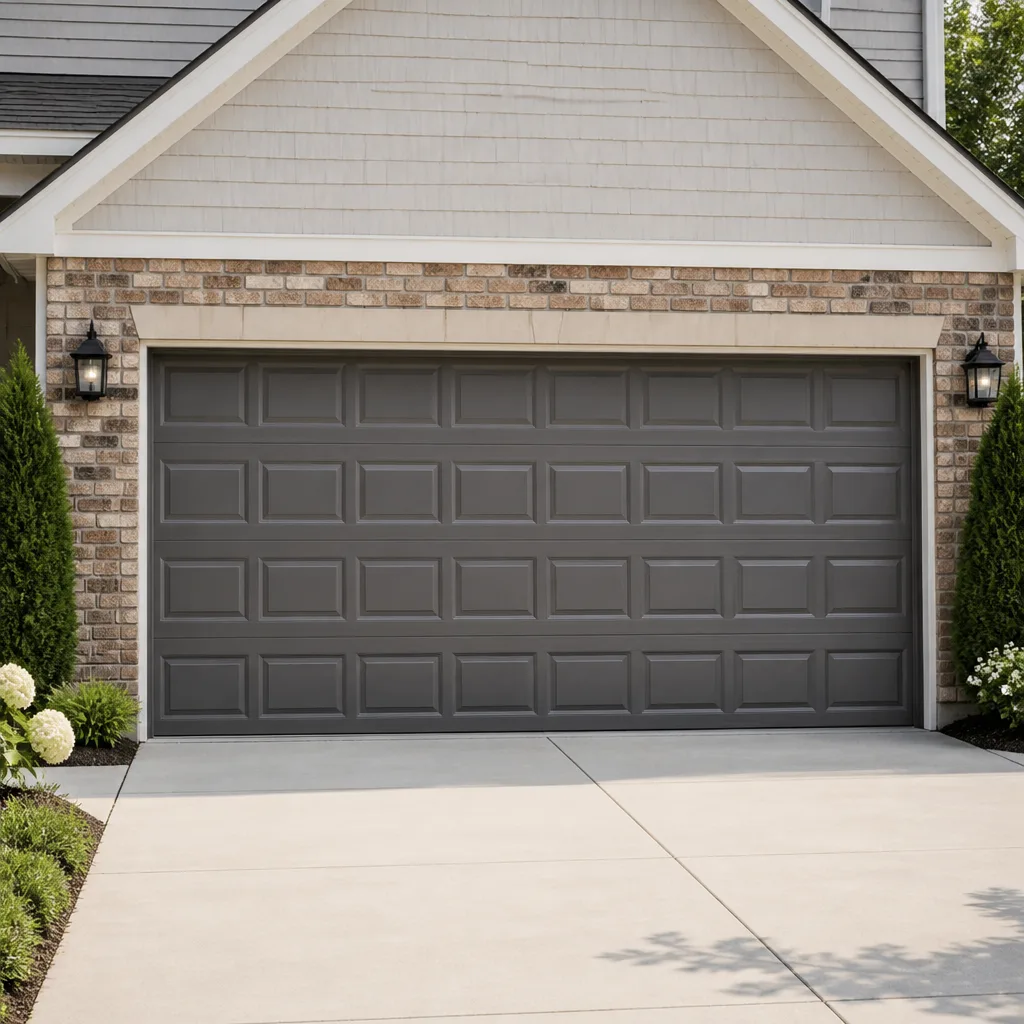 Raised-panel steel
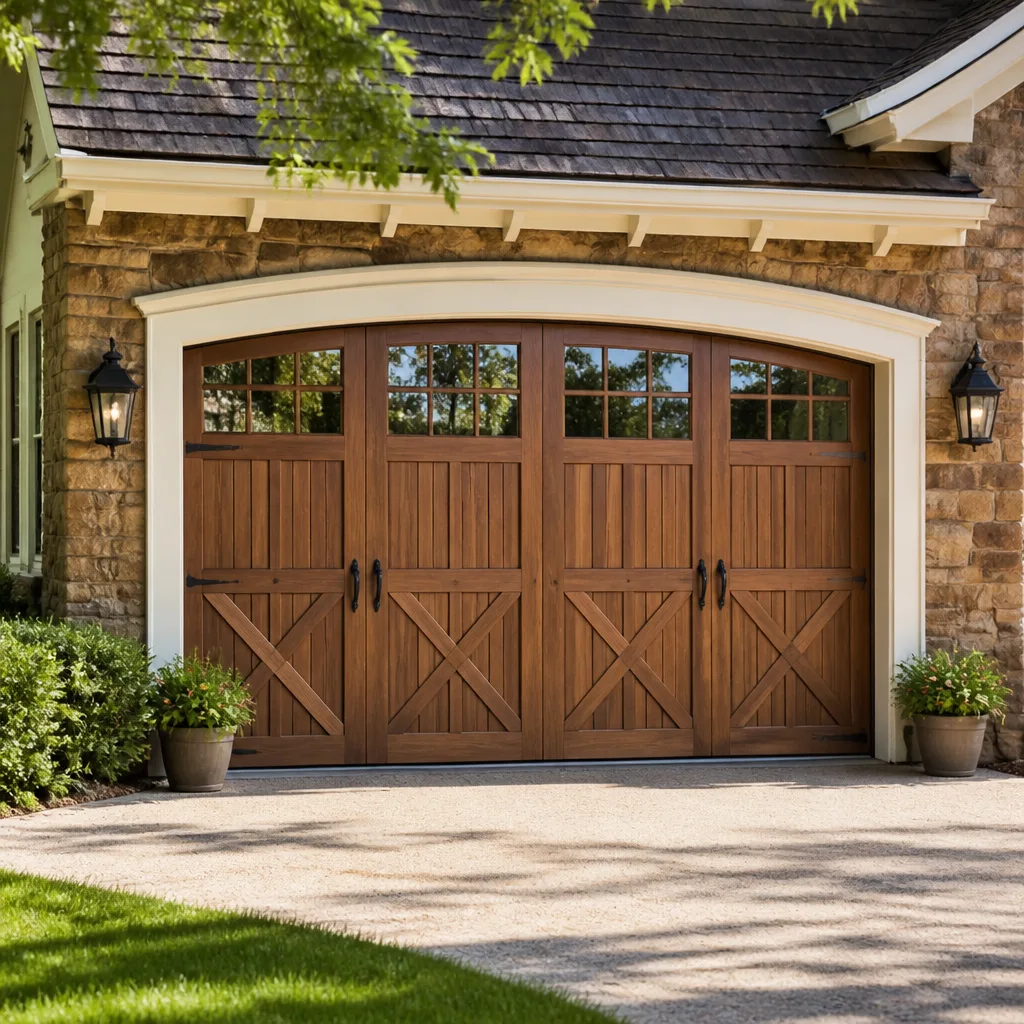 Carriage house
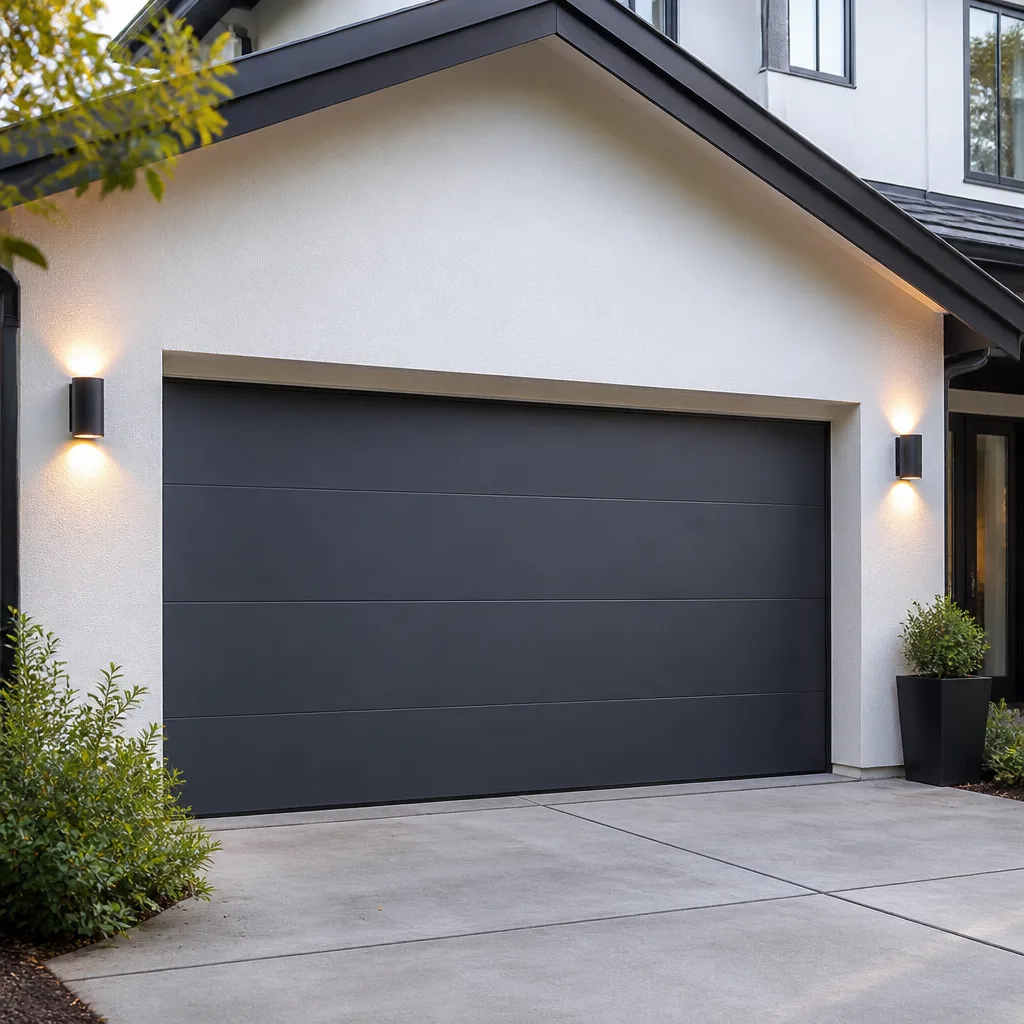 Modern flush
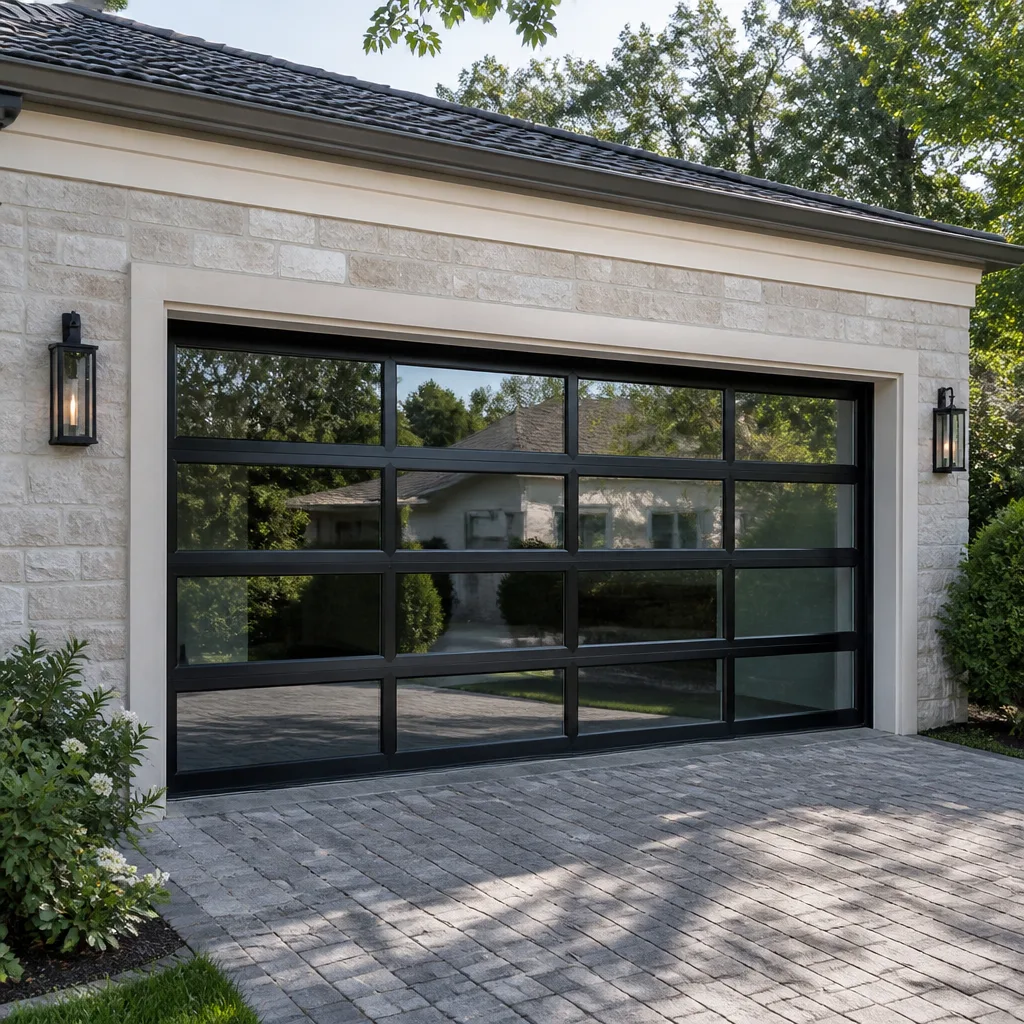 Full-view glass
 LiftMaster openers
 Chamberlain openers
Full 25-point door and opener safety check with every visit - springs, cables, rollers, tracks, and your LiftMaster or Chamberlain opener included
You get a price before we start. It does not change when the pro arrives.
Get your free estimateGarage Door Warning Signs: A Downers Grove Homeowner’s Reference Guide
A garage door that hesitates for two seconds before it moves on a cold morning isn’t “being slow.” It’s showing you a force calibration problem or a lubrication failure that will strand your car inside the garage on the coldest morning of the year. Most warning-sign guides point at the obvious stuff: a snapped spring, a door hanging crooked, a opener that’s gone silent. Those matter, but by the time you see them the breakdown has already happened. The signals worth your attention are the quiet ones that show up weeks or months early, and in Downers Grove’s freeze-thaw winters, they look different than they do in milder parts of the country. This guide walks you through how to read those early signals, what you can safely check from the ground, and which ones mean call someone today. Downers Grove homeowners deal with the same hardware everyone else does, just under a climate that stresses it in specific ways.
Quick Answer
The early warning signs of a failing garage door in Downers Grove are a door that hesitates or reverses before fully closing, grinding or popping sounds during travel, a door that drifts down when you lift it halfway, visible cable fraying or a spring gap, and an opener that strains more in cold weather than it did last winter. Any sound or movement change that shows up suddenly, or a door that reverses on its own, means call a professional now. Slower, cosmetic changes can wait for a scheduled visit.
Styles & brands we work with
- Raised-panel steel
- Carriage house
- Modern flush
- Full-view glass
- LiftMaster openers
- Chamberlain openers
Table of Contents
- Cold-Weather Signals: What Downers Grove Winters Do to Your Door
- Spring Tension Loss vs. Opener Force Problems: Telling Them Apart
- Noisy vs. Failing: Which Sounds Matter
- Visual Checks You Can Do Safely From the Ground
- The Balance Test and Reversal Test
- Same-Day Warning Signs vs. Schedule-a-Week-Out Signs
- Common Mistakes to Avoid
- When to Call a Professional
Cold-Weather Signals: What Downers Grove Winters Do to Your Door
Downers Grove sits in a part of northern Illinois where winter delivers repeated freeze-thaw cycles rather than a steady deep freeze. That matters for your garage door because the metal components, the springs, and the opener’s drive system all expand and contract as temperatures swing. A door that runs smooth in October can start acting up in December without anything actually breaking. Some of that is normal seasonal behavior. Some of it is the early stage of a failure that will leave you stuck.
Here’s what cold weather specifically does:
- Grease thickens. The lubricant on rollers, hinges, and the torsion bar gets stiffer below freezing, so the door needs more force to move. If your opener was already near its force limit, the cold pushes it over.
- Metal contracts. Tracks, springs, and panels shrink slightly. A door with tight clearances can start rubbing where it didn’t before.
- Spring tension changes subtly. Torsion springs lose a bit of their stored energy as they cool. A spring that’s already near the end of its service life will feel much weaker below 20 degrees.
- Weatherstripping hardens. The bottom seal gets brittle and drags against the threshold, adding resistance the opener has to overcome.
The counterintuitive part: a door that struggles in the cold and then runs fine once the sun hits it is not “warming up.” It’s telling you the opener’s force setting is doing work it shouldn’t have to do, or a spring has lost tension and the opener is compensating. That compensation delays the failure but doesn’t prevent it. When the opener can’t compensate anymore, the door stops mid-travel or reverses and won’t close. If you notice this pattern in Downers Grove, get it looked at before the next cold snap rather than after. A trained technician can measure the actual force required and tell you whether it’s a lubrication issue, a force calibration on your LiftMaster or Craftsman opener, or a spring problem.
Some cold-weather behavior is genuinely normal. A slight groan on the first cycle after a cold night, or a door that runs a bit slower until the garage warms up, isn’t automatically a red flag. The signal to watch is a change from last winter. If the door struggled more this year than last, something has degraded.
Spring Tension Loss vs. Opener Force Problems: Telling Them Apart
This is the distinction most homeowners get wrong, and it leads to the wrong fix. Both problems produce similar symptoms, a door that strains, hesitates, or reverses, but they have different causes and different solutions. If you replace an opener when the real problem was a weak spring, you’ll be back on the phone within months. If you replace a spring when the opener’s force setting was simply miscalibrated, you spent money on a part you may not have needed.
Use this comparison to narrow down what you’re seeing. You won’t diagnose it definitively without a technician, but you’ll know what you’re likely dealing with.
Signs the problem is a spring
- The door feels noticeably heavy when you lift it by hand (with the opener disconnected, on a manual door).
- The door drops or sags when you let go at the halfway point (this is the balance test, covered below).
- The door travels unevenly, one side higher than the other.
- You hear a loud bang from inside the garage at some point, followed by the door not opening at all.
- There’s a visible gap of several inches in the spring coil above the door, or you can see two separate coils where there used to be one continuous spring.
Signs the problem is the opener
- The door moves smoothly by hand (again, with the opener disconnected) but hesitates when the opener drives it.
- The opener’s light flashes a code pattern that doesn’t match the manual (on LiftMaster and Chamberlain units, blink patterns point to sensor or force issues).
- The door reverses immediately or partway through closing, without obstruction in the beam path.
- The opener makes a rhythmic clicking or grinding during travel that increases with load.
- The force setting has drifted up over time because the door got harder to move and someone bumped it instead of fixing the cause.
In Downers Grove winters, both problems can appear at once. The cold stiffens the door hardware (opener strain) while also reducing spring tension (spring strain). A door that’s showing both symptoms needs a full mechanical inspection, not a spot fix. Springs are the highest-risk component in the whole door assembly. If you see a broken spring or a gap in the coil, don’t touch the hardware. Contact garage door spring repair before anything else; torsion springs are under hundreds of pounds of tension and can cause serious injury if mishandled.
Noisy vs. Failing: Which Sounds Matter
A garage door is a mechanical system with metal parts moving against each other. Some noise is normal. The question is whether the noise is the door’s baseline or something new. Most Downers Grove homeowners have lived with their door’s sound for years and will notice the moment it changes. That instinct is usually right. The trick is knowing which changes mean “lubricate and adjust” and which mean “stop using it.”
The useful split is between escalation and constancy. A sound that gets louder over weeks, spreads to more cycles, or starts happening on both opening and closing is escalating. A sound that’s been the same for years is your door’s baseline. Here’s how to sort them:
Sounds that are usually normal (or just need maintenance)
- A rhythmic squeak on the same part of the cycle: often a dry roller or hinge. Lubrication usually resolves it.
- A light rattle or vibration: loose bolts or panels that need tightening.
- A faint hum or click from the opener motor: normal operation, especially on Genie and Raynor openers.
- A softer grumbling in cold weather: grease stiffness, common in Downers Grove winters.
Sounds that mean stop and call
- A loud metal bang followed by the door not responding: a spring has broken. Don’t try to open it.
- Grinding that gets louder over several cycles: track damage or failing rollers on one side. Continuing to run it will damage the door.
- Popping or snapping during travel: often cable issues or torsion bar problems.
- A sudden scraping or metal-on-metal that wasn’t there before: a track or panel has shifted.
- A rhythmic thump on each cycle that’s getting stronger: a failing spring, or an opener struggling against a load it can no longer handle.
In our experience, the loud bang of a broken torsion spring is the one homeowners always describe the same way, and it’s the one where stopping everything is the correct response. If you’re in Downers Grove and you hear that sound, don’t run the opener to test it. Call for emergency help. The door is under full weight with no counterbalance, and running the opener on a broken spring can damage the opener motor and the door panels.
Visual Checks You Can Do Safely From the Ground
You can inspect a surprising amount without touching anything. These checks are safe from the ground because they don’t involve reaching into the mechanism, and they don’t require you to stand under the door. Do them monthly, or after any cold snap that seems to have changed how the door runs.
- Look at the springs above the door. If it’s a torsion setup, you’ll see one or two horizontal springs on the bar above the door. Look for a visible gap of a few inches in the coil, which means a broken spring. If it’s a standard extension setup, the springs run along the horizontal tracks; look for stretched or separated coils. Don’t touch, don’t adjust, just look.
- Look at the cables. The steel cables run along the sides. Frayed strands, a kinked section, or a cable that’s clearly loose on one side is a call-a-pro sign. Small cosmetic wear on the outer layer is normal; splayed or broken strands are not.
- Check the tracks. From the floor, look down the tracks on both sides. They should be straight and parallel. Dents, bends, or a track that’s pulled away from the wall at an anchor point means the door isn’t moving correctly.
- Inspect the rollers. Rollers are the wheels that ride inside the tracks. From the ground you can see whether any are chipped, cracked, or missing. A missing roller will make the door jump on that side.
- Look at the bottom seal. If the weatherstripping is torn, hanging loose, or missing chunks, the door isn’t sealing properly. That’s a comfort and pest issue more than a safety one, but it’s worth noticing.
- Check the panel alignment. Stand back and look at the door head-on. Panels should line up straight. A door that looks skewed or has a visible sag on one side has a balance or spring problem.
The one thing you should never do from the ground is reach up and try to move a spring or cable by hand. Torsion springs in particular carry so much stored energy that a moment’s slip can break a hand or worse. Downers Grove homeowners who call us with questions about their springs are usually right to be cautious. We tell them the same thing on the phone we’d tell a neighbor: look and don’t touch. If you see something wrong, get it looked at before you run the door again.
The Balance Test and Reversal Test
These two tests are the most useful five minutes you can spend on your garage door. Together they tell you whether the springs are carrying their share of the load and whether the opener’s safety systems are working. Do them once a month, or any time the door starts behaving differently. Here’s how.
The balance test
- Close the door fully.
- Pull the manual release cord (usually the red rope hanging from the opener trolley) to disconnect the door from the opener.
- Lift the door by hand to about waist height.
- Let go.
- A balanced door should stay in place, roughly. It shouldn’t drop, slam, or rise on its own.
If the door falls, the springs aren’t holding it. That could be a broken spring, a stretched spring, or a spring that’s simply lost tension. Don’t try to lift it further or test it repeatedly; each drop puts more stress on the door and track. Reconnect the door only if you can do so safely without forcing. If not, call for help. If the door rises on its own, the springs are over-tensioned, which is equally a safety issue and needs adjustment by someone trained to do it.
The reversal test
- Close the door to about chest height (not all the way).
- Wave a hand or place a small object in the path of the safety sensors at the bottom of the tracks.
- The opener should stop immediately and reverse.
- Then, with the door open, place an object (a piece of scrap wood or a box) directly under the middle of the door.
- Press the close button. The door should stop and reverse when it contacts the object.
If the door doesn’t reverse on either test, the opener’s safety system has failed. That’s an immediate call. The door’s force sensor and photoelectric safety sensors are the two mechanisms that prevent the door from closing on a child, a pet, or an object. If either one is not working, you should not use the door until it’s fixed. On most LiftMaster and Chamberlain units, the sensors at the bottom have a small indicator light that gives you a clue (one solid, one blinking means misalignment is the likely culprit). What you don’t want to do is override the safety and keep driving it. That’s the one shortcut with real injury risk.
Same-Day Warning Signs vs. Schedule-a-Week-Out Signs
Not every warning sign needs a same-day response. Knowing which bucket you’re in saves you money and stress. Here’s the split we use when a Downers Grove homeowner describes symptoms on the phone.
Call today, same-day service
- A broken spring (loud bang, door won’t open, visible gap in the coil).
- The door has come off one or both tracks.
- A cable has snapped or come loose.
- The door reverses on its own or won’t close at all.
- The opener runs but the door doesn’t move (broken drive gear or coupler).
- Any safety sensor failure (reversal test fails).
- The garage is your primary exit and the door is stuck open with no way to close it.
These are the situations where waiting a week means a week of parking on the street or an unsecured garage. Call us immediately if any of these are happening; our team handles emergency garage door service for exactly these scenarios. You can read more about our full scope on the garage door repair page.
Schedule within a week or two
- A door that’s gotten noisier but still moves normally.
- A visual issue like a chipped roller, a roller that needs replacement, or a bent track that’s not yet obstructing travel.
- Weatherstripping that’s torn or missing.
- A door that’s slightly uneven but not sagging or reversing.
- A light that’s out on the opener, or one that blinks off cycle.
- Cosmetic panel damage that doesn’t affect operation.
If your opener is old and behaving inconsistently, a garage door opener repair visit can catch it before it fails. Knowing which brand you’re running makes a real difference here: a technician familiar with Raynor or Wayne Dalton systems will diagnose faster than someone reading the manual cold. We work on the brand you already have, which is usually the fastest path to getting it fixed.
Common Mistakes to Avoid
- Ignoring a slow door until it stops. A door that struggles in the cold for a few weeks usually fails. Treating the delay as nothing is how a $0 diagnostic turns into a tow-and-replace situation on the coldest morning of the year.
- Bumping the opener’s force setting instead of finding the cause. Increasing the force on a LiftMaster or Craftsman opener “fixes” the symptom for a while. But if a spring lost tension, that extra force is now grinding the opener and the door. Find the cause, don’t hide the symptom.
- Airing up the door in November instead of October. In Downers Grove, the first hard cold snap is usually the trigger for anything already failing. A pre-winter lubrication and balance check gives you a baseline before the cold tests every component at once.
- Touching a torsion spring with no training. Small gaps, slight adjustments, “just a little turn”: every one of these kills hands every year. Never reach into the spring or cable assembly, no matter how small the adjustment seems.
- Disconnecting the opener to “test” the door with no plan for reconnecting. Once the manual release is pulled, the door is unpowered and heavy. If you can’t lift it safely, you can’t close it safely. Have someone ready to help before you release.
- Hiring a general handyman for a spring or cable job. Springs and cables require specific training and tooling. A door repair sets a specific standard of care that a generalist won’t meet. Downers Grove has plenty of handymen, but they shouldn’t be touching torsion springs.
- Running the door on a broken spring to see if it “settles.” It won’t. You’ll burn out the opener motor, bend panels, and turn a repair into a replacement. Stop using the door and call.
See the difference
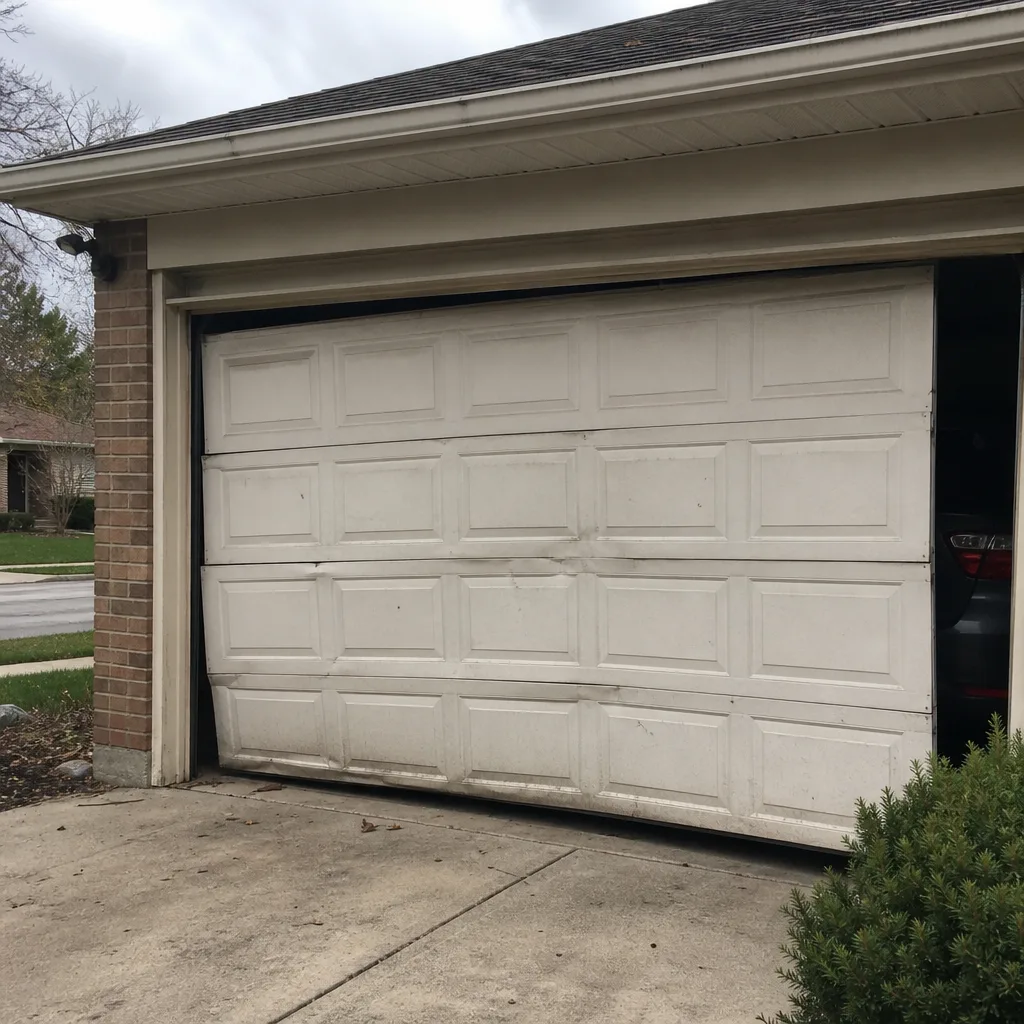 Before
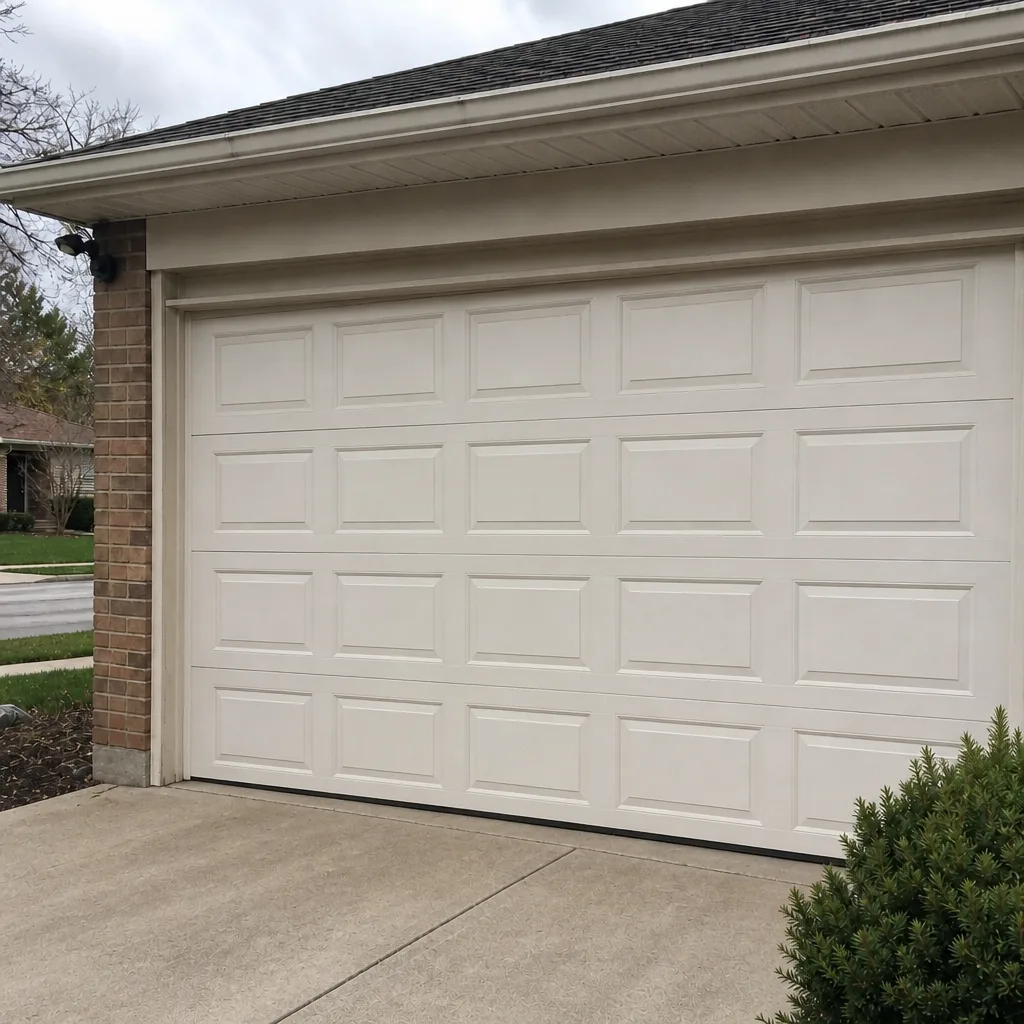 After
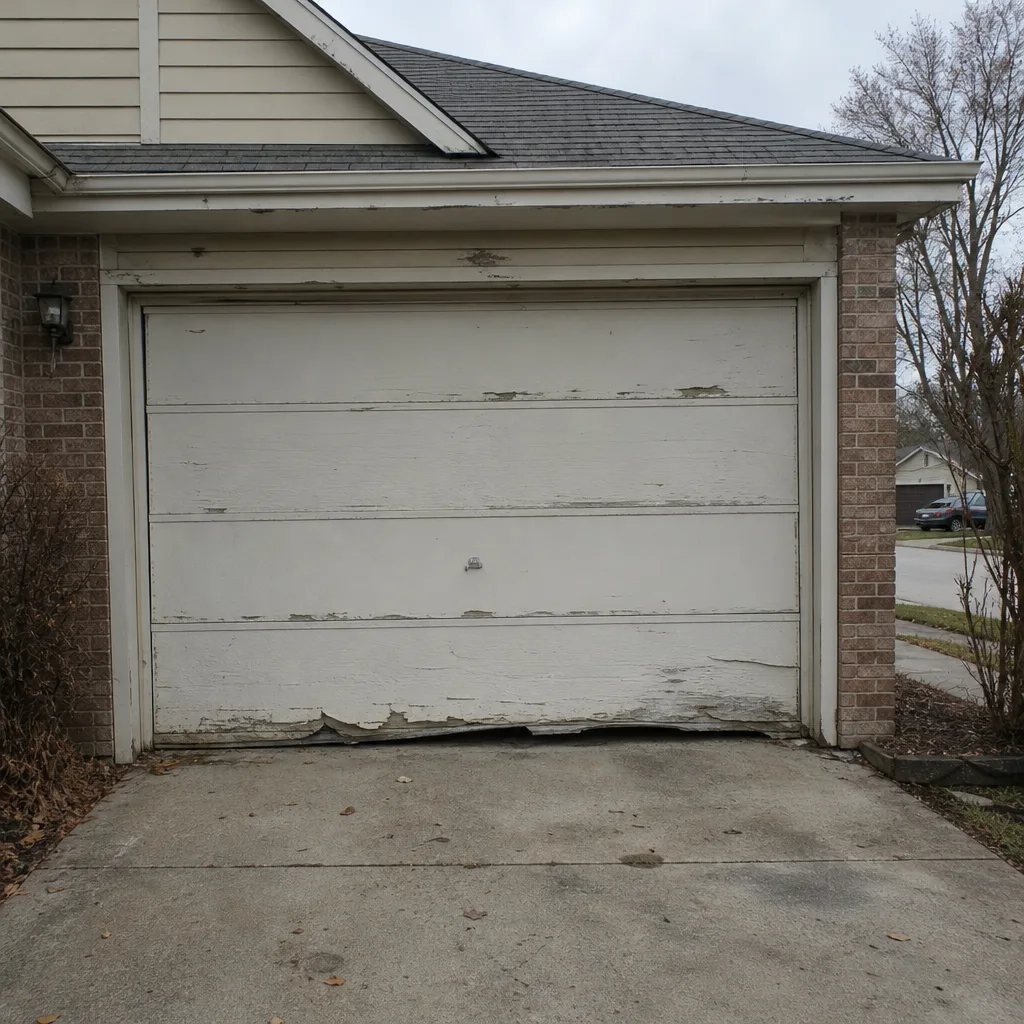 Before
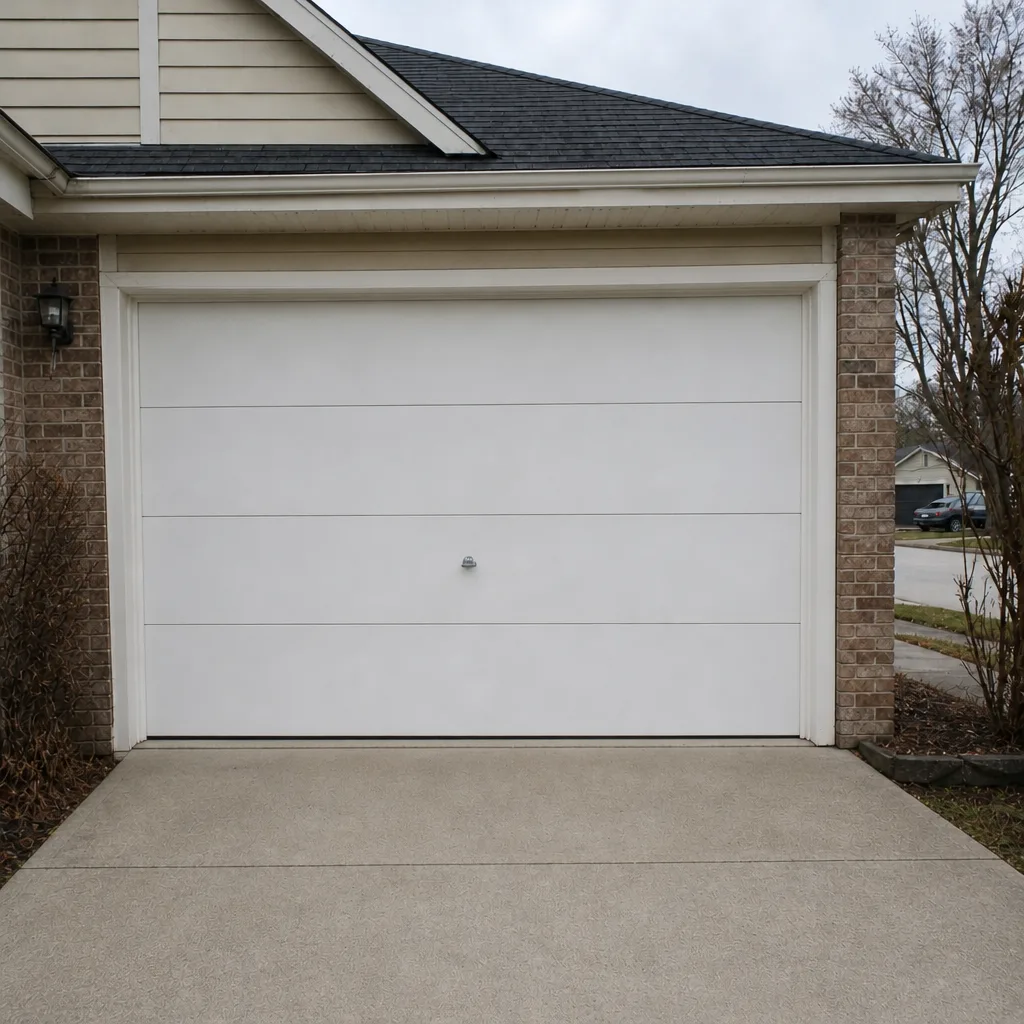 After
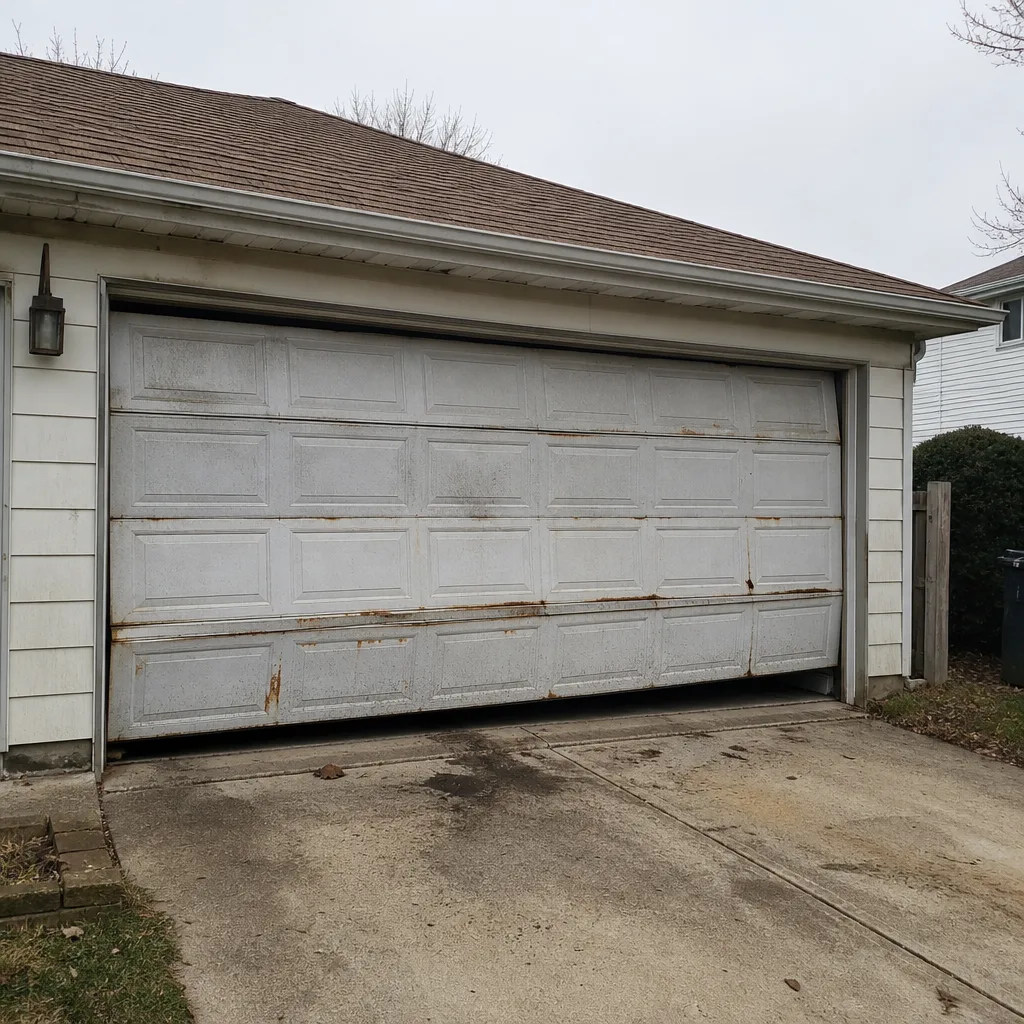 Before
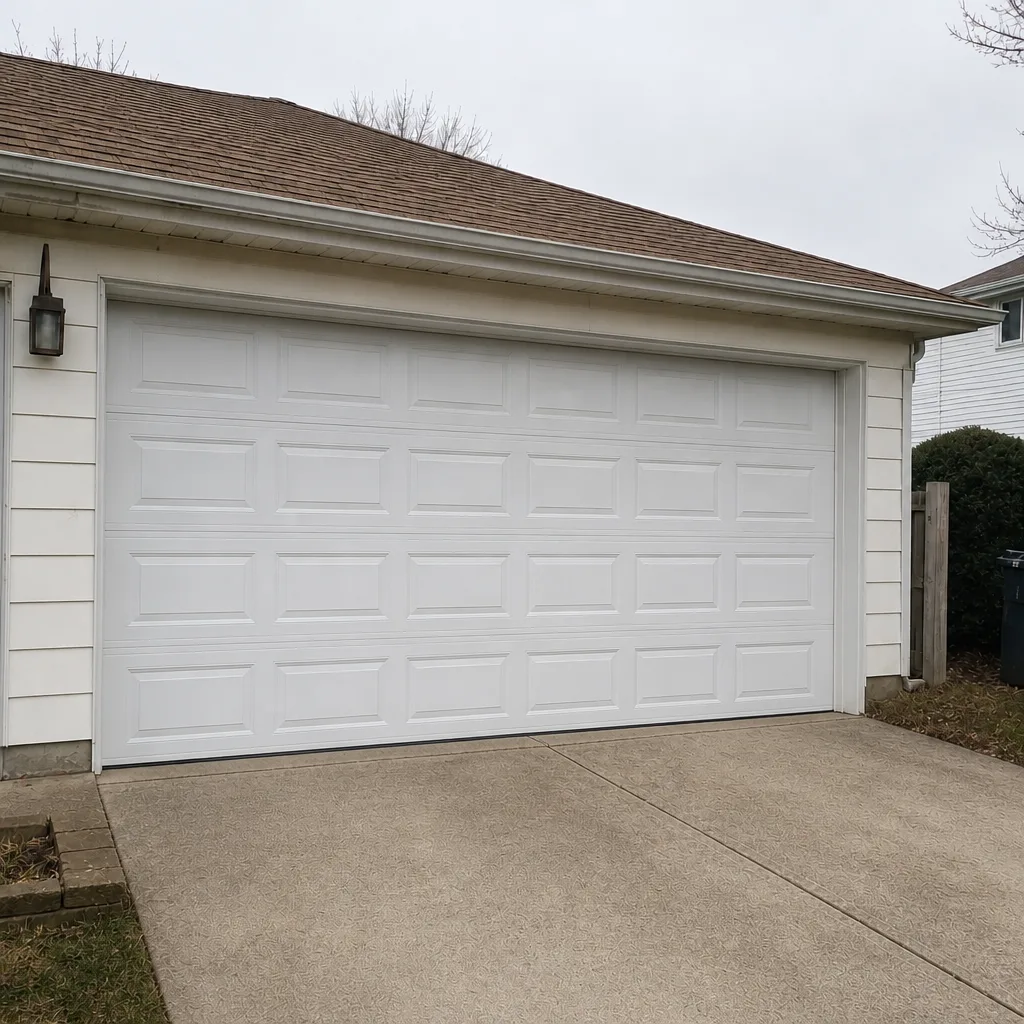 After
When to Call a Professional
We recommend calling a professional any time the warning sign involves the spring assembly, the cables, the balance test, the reversal test, or any sudden change in how the door moves. Those are the signals that either indicate an active safety hazard or point to a component that will fail soon. Cosmetic issues, minor lubrication, and slow-opener symptoms can wait for a scheduled appointment, but anything affecting the door’s ability to close, reverse safely, or return to a balanced position should be handled before the door runs again.
Downers Grove Garage Door Repair Pros offers free estimates in Downers Grove, and our technicians have up to 10 years of experience with the major brands you’re most likely to have, including LiftMaster, Craftsman, Wayne Dalton, and Raynor. We handle springs, openers, panels, tracks, and full replacements, so one call covers everything from a stuck door to a scheduled tune-up. Call (877) 730-4856 to get it diagnosed. Estimates are free, the price is quoted and agreed before any work starts, and you’ll know what you’re paying before we begin.
Springs, openers, panels, full replacements: we cover the full cycle. If the sign you’re seeing isn’t in this guide, describe it on the phone and we’ll tell you what it likely is and how soon it needs attention. For an overview of everything we handle, see Downers Grove Garage Door Repair Pros.
Frequently Asked Questions
The first signs are usually subtle: a door that hesitates before moving, a change in the sound during travel, a door that reverses partway through closing, or a floor-level draft that wasn’t there last year. In Downers Grove winters, the earliest sign is often a door that gets noticeably harder to move in cold weather than it did the previous winter. If that pattern shows up, have it checked before the next cold snap. Call (877) 730-4856 for a free estimate.
Garage door spring repair in Downers Grove typically costs $180 to $340 for one torsion spring, with a matched pair usually replaced together and costing roughly twice that. The price depends on the spring type, door weight, and whether the door needs adjustment. The written quote you receive is the price; it’s quoted and agreed before any work starts. Call (877) 730-4856 for an exact quote. Estimates are free.
Yes, for the failures that can’t wait: broken springs, a door off its track, a snapped cable, an opener failure, or a door that won’t close. We offer emergency garage door service for these situations. Cosmetic repairs and scheduled maintenance typically get booked a few days out. If you’re not sure which one applies, call (877) 730-4856 and describe it.
Run the balance test with the door disconnected from the opener: if the door drops, the spring is the problem. If the door is smooth by hand but hesitates when the opener drives it, the opener is the likely cause. Cold weather can make both worse at once, which is common in Downers Grove. When in doubt, a technician can measure both with a quick diagnostic. Call (877) 730-4856 to schedule one.
No. The price is quoted and agreed before any work starts. If the technician finds something else during the inspection, you’ll get a separate written estimate for that work before any of it begins. You won’t be surprised by an invoice larger than the quote. Call (877) 730-4856 for a free estimate on your specific door.
The local professionals we connect you with are licensed and insured as their state requires. We focus exclusively on garage doors and openers, and our technicians have up to 10 years of experience working with the major brands a Downers Grove homeowner is likely to own. If you have a specific licensing or insurance question before booking, call (877) 730-4856 and we can point you to the right answer.
The Bottom Line
The warning signs that matter most are the ones that show up quietly, weeks before a failure, and in Downers Grove’s climate those signals often arrive as a sluggish door on the first cold night of the season. Treat a change in your door’s speed, sound, or balance as information, not noise. Run the balance test and the reversal test once a month. Look at the springs and cables from the ground and don’t touch the hardware. Know which signs mean call today and which can wait for a scheduled visit. That’s the whole system. A door that’s understood stays safe, and a door that’s ignored becomes an emergency.
If you need a hand reading what your door is telling you, call (877) 730-4856 for a free estimate. We’re specialists, we know these systems, and we’d rather help you catch a small problem than fix a big one.
Written by the team at Downers Grove Garage Door Repair Pros.